Which impact of genome defense / transposon interplay on genome architecture?
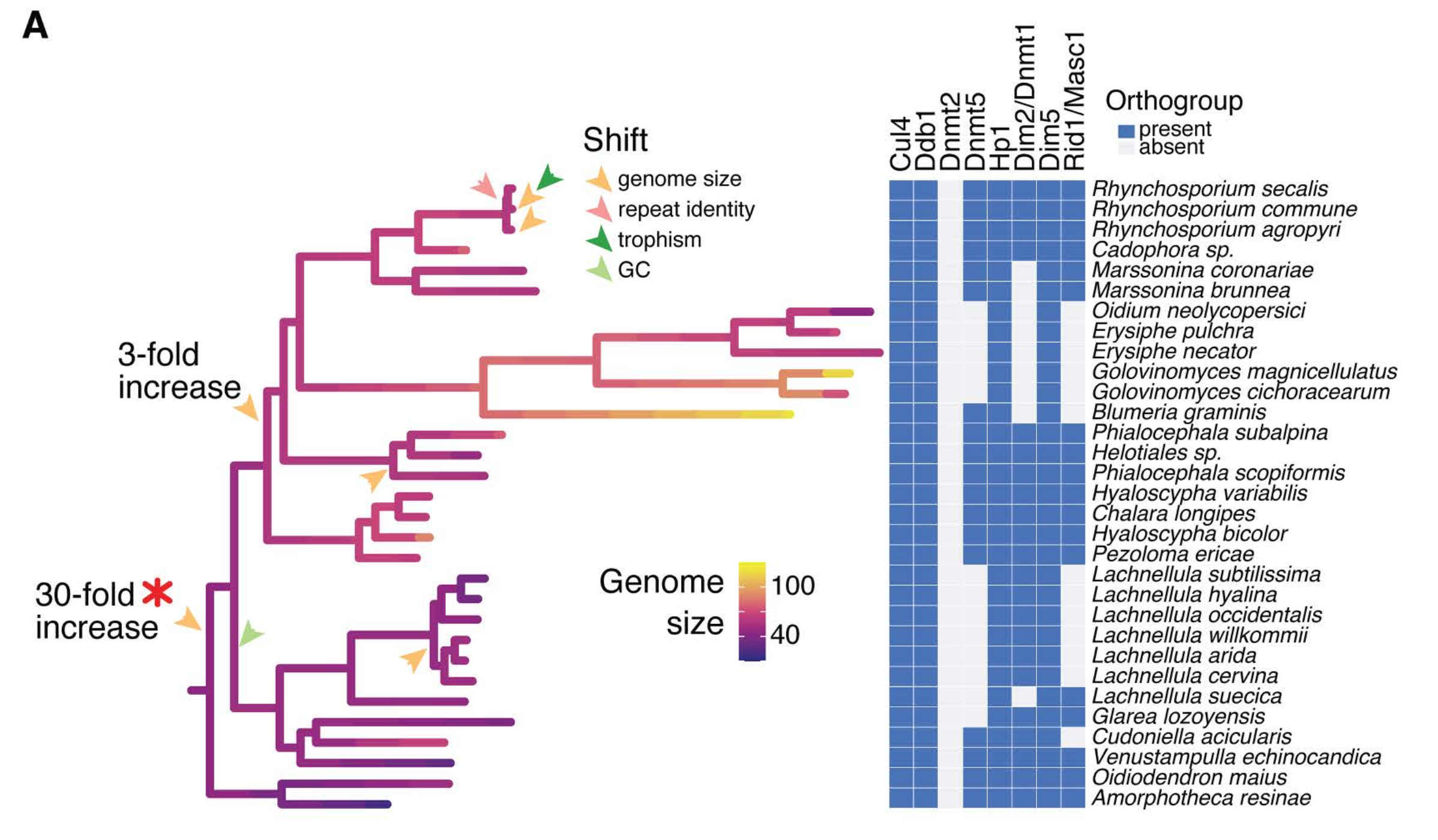
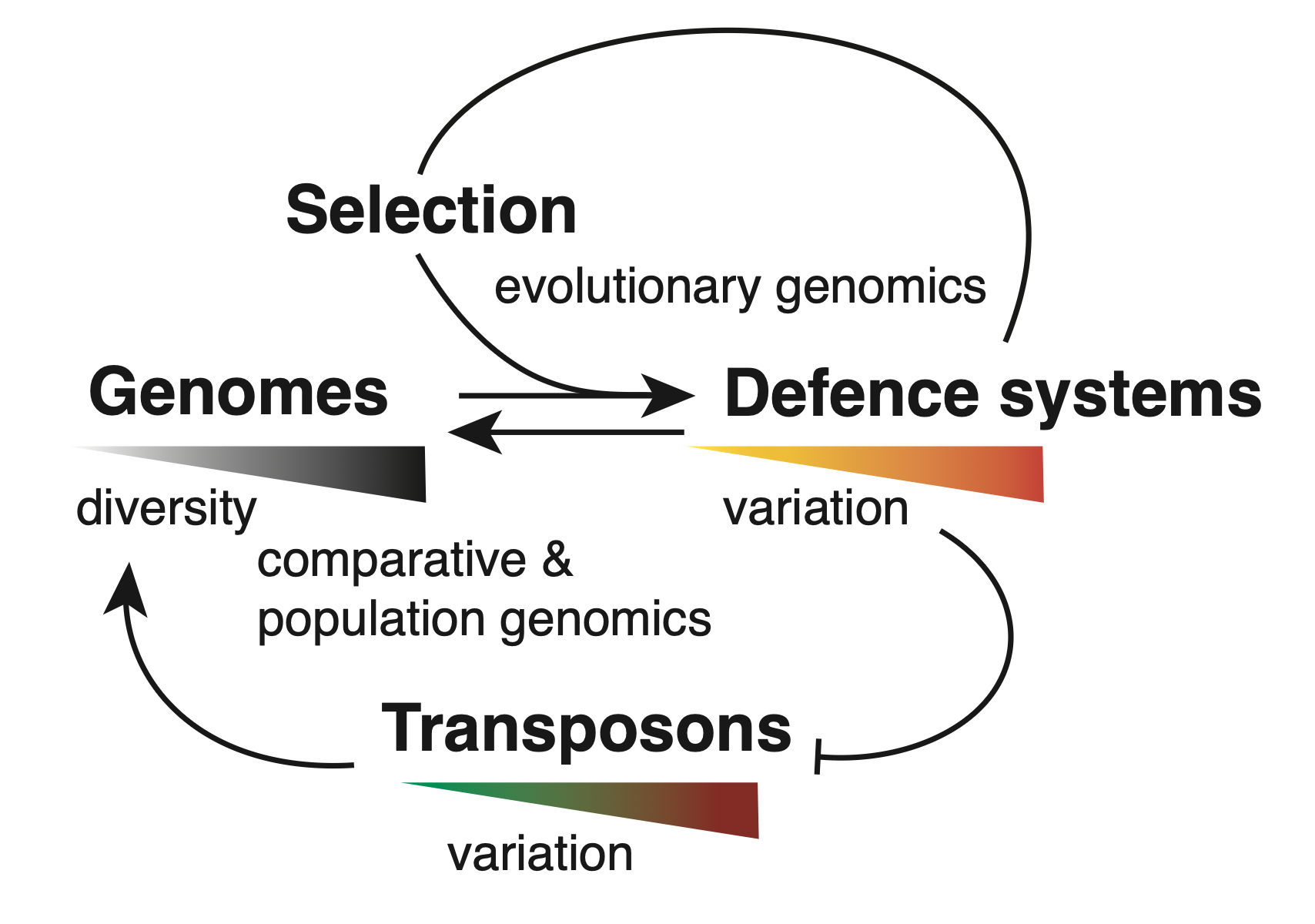
A key direction of my research concerns how transposon defense mechanisms influence genome architecture across fungi. Focusing on the kingdom-specific process Repeat-Induced Point mutation (RIP), I investigated how targeted mutagenesis of repetitive DNA shapes transposon activity and genome evolution in fungi, particularly within Ascomycota. Using large-scale comparative phylogenomics across more than a thousand fungal genomes, I reconstructed the evolutionary distribution of RIP-associated signatures and examined how changes in genome defense capacity correlate with genome architecture. This analysis showed that loss of RIP is strongly associated with large-scale genome expansion and increased genomic structural complexity, linking a molecular defense mechanism directly to long-term genome size evolution. Beyond characterizing RIP distribution, the work identified candidate molecular components potentially involved in generating RIP-like mutation patterns, including a zinc-finger protein with strong phylogenetic association signals. Overall, this research connects transposon control mechanisms with deep evolutionary shifts in genome structure, highlighting genome defense as a major determinant of fungal genome evolution.